
Washed Gravel vs. Crushed Gravel: What’s the Difference?
Washed gravel and crushed gravel serve different purposes depending on drainage, stability, and traffic demands. Learn how each material performs and which is best suited for your project.
October 1, 2026
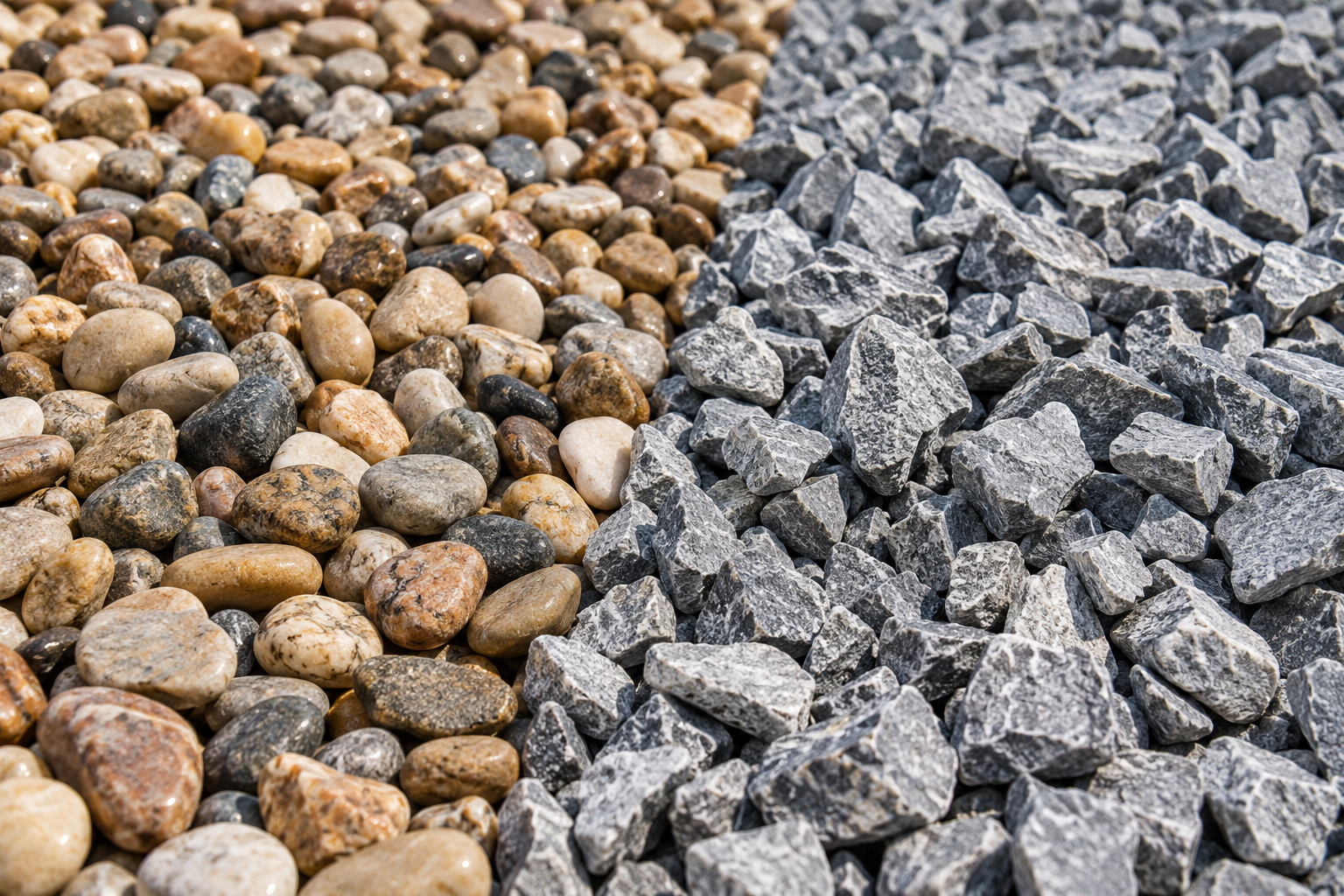
Washed gravel and crushed gravel are not the same material, even though both show up in many of the same projects. The main difference is that washed gravel has had fines removed, while crushed gravel has been mechanically broken to create angular pieces. That affects how each one performs, especially in drainage applications, base layers, and areas that need to hold up under traffic.
How Is Washed Gravel Made?
Washed gravel is stone that has been screened to size and rinsed with water to strip away clay, silt, and stone dust. Nothing fine remains to fill the gaps between pieces, so a pile of washed gravel stays loose and open. Much of the washed gravel sold for landscaping and drainage comes from sand and gravel deposits, where moving water rounded the stone long before it reached a screen.
Those smooth, rounded pieces give river rock its clean look in a garden bed or at the base of a downspout. Pea gravel, at roughly three-eighths of an inch, sits at the small end of common washed sizes, while one-inch river rock covers larger beds and drainage outlets. Both stay loose after placement rather than packing into a firm surface.
How Is Crushed Gravel Made?
Crushed gravel takes a different route through a plant. The stone runs through a mechanical crusher that fractures each piece and leaves sharp, angular faces behind. The feed can be oversized gravel from a pit or quarried rock such as limestone, and the crusher setting controls the top size of what comes out.
Many crushed products keep the fine particles the crusher produces, so the finished material runs from coarse stone down to dust. Dense grade aggregate, also sold as crusher run, is the familiar example. Under a plate compactor or roller, the angular faces press against one another while the fines fill the remaining gaps, and the layer tightens into a firm base for driveways and parking areas. That same locked structure makes crushed stone a staple among paving aggregates, where it carries the asphalt or concrete placed above it.
How Do Washed and Crushed Gravel Handle Water?
Water moves straight through washed gravel, using the open gaps the rinse left behind. Crushed gravel with fines packs those gaps shut, so a compacted layer sheds much of its water across the surface instead of letting it soak through.
A French drain, a trench around perforated pipe, or backfill behind a retaining wall calls for clean washed stone, because loose fines would migrate into the pipe or seal the voids that carry water away. Where Iowa ground runs toward heavy clay, water lingers near the surface longer, and a clean stone trench gives it a faster path off the site.
Driveway bases need the reverse. Water trapped in a base expands when it freezes, so a layer that holds moisture through winter can lift and loosen by spring, while a compacted crushed base with a proper crown sends more of that water toward the edges. The same logic runs through the choice of gravel types for preventing winter driveway erosion, where grading and material work together to move snowmelt off a drive.
How Does Crushed Gravel Handle Traffic?
Angular faces on crushed gravel lock against each other under tires instead of sliding past, which keeps a crushed layer in place under traffic. Rounded washed gravel lacks those edges, so it tends to roll and spread under wheel pressure, especially on a slope or at a turn. Ruts and scattered stone along the edge of a drive are the usual sign that rounded rock ended up carrying vehicle weight.
That contrast sorts the two materials by load. Crushed gravel with fines belongs anywhere a truck or trailer will park or turn. Washed gravel fits garden beds, edged paths, and drainage layers, where a loose, open layer does exactly what the job needs.
Can Gravel Be Both Washed and Crushed?
Gravel can be both washed and crushed, and some of the most useful products on a job go through both steps. Crushed stone that is rinsed after crushing keeps its angular faces but loses its fines, so it drains like washed gravel while still locking together better than rounded rock. A clean crushed stone around three-quarters of an inch is a common version of this product.
Clean, angular stone fits jobs that need water movement and solid footing at once, such as the base beneath a permeable paver system or the stone bed around foundation drain tile. Concrete depends on the same clean surface. Dust or clay coating a piece of coarse aggregate weakens its bond with the cement paste, which is why the rock in a ready-mix batch is usually washed before it goes into the drum.
How to Choose Between Washed and Crushed Gravel
The choice between washed gravel and crushed gravel comes down to the two things each process changes, fines and shape. The rinse removes the fines that would otherwise block water, and the crusher creates the angular faces that lock a layer in place under weight. A job that needs both drainage and stability calls for stone that has been through both steps.
Hallett Materials supplies river rock, limestone in multiple sizes, and custom-crushed gravel from more than 40 aggregate deposits. Request a quote to match the right gravel to an upcoming project.