
4 Ways Aggregate Selection Affects Road and Highway Performance
Aggregate selection affects how roads and highways resist rutting, manage drainage, withstand freeze-thaw cycles, and maintain skid resistance. Learn how stone shape, gradation, hardness, and pore structure influence long-term pavement performance.
November 1, 2026
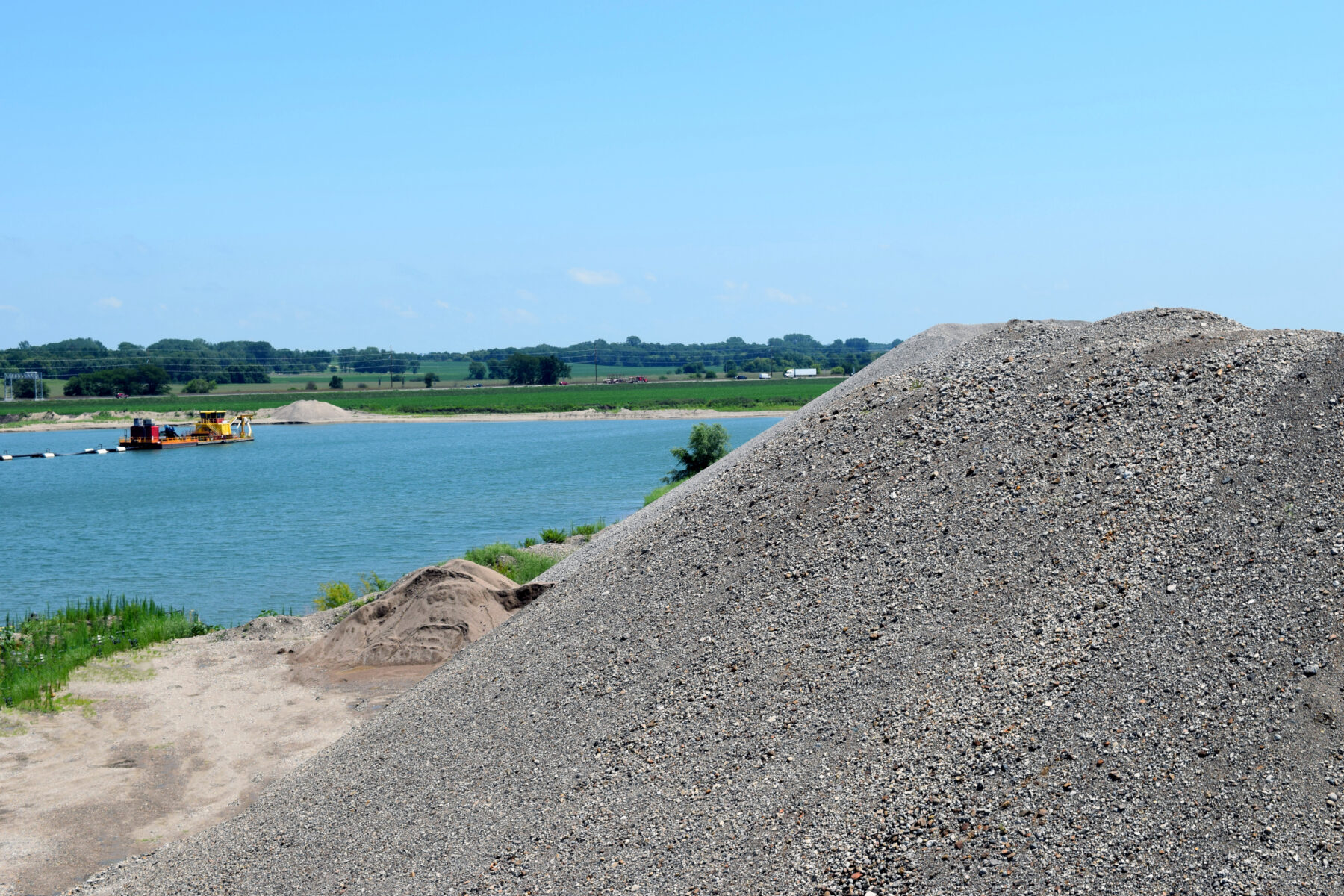
Aggregate selection shapes how a road or highway wears over time. Crushed rock and gravel support the pavement from below and make up much of the asphalt or concrete above, so the physical traits of the stone influence rutting, drainage, freeze-thaw resistance, and skid resistance in different parts of the road.
- How Does Aggregate Shape Affect Rutting?
Angular aggregate resists rutting better than rounded stone, because sharp, fractured faces lock against each other under the sideways push of a loaded truck tire. Rounded gravel tends to roll past its neighbors under the same load, and that movement shows up as ruts in the wheel paths. That interlock matters in the compacted base and again in the stone inside an asphalt mix, so paving specifications for heavy-traffic roads commonly set a minimum share of fractured particles.
Rounded stone from a natural gravel deposit still has a place in a road once it passes through a crusher. The crusher splits the larger pieces and leaves fresh fractured faces on many of them, turning river-worn gravel into road stone that locks together under a roller. Quarried limestone comes out of the crusher angular from the start, and it ranks among the most common paving aggregates in both base courses and asphalt mixes.
- What Aggregate Gradation Suits a Road Base?
A dense aggregate gradation, running from coarse stone down to a limited share of fines, suits most road bases because it packs that interlocked stone tightly and still lets water leave. A dense-graded base uses smaller particles to fill the gaps between larger ones, which raises its density under the roller and stiffens it against traffic. The finest dust in the blend carries a tradeoff, because a base with too much of it holds water instead of releasing it.
Pavement research generally points to a ceiling of about 8 percent fines by weight in a granular base, and load-carrying capacity starts to drop once fines climb much past that. Water held in a fine-heavy base softens it under passing trucks and expands as it freezes, lifting the pavement above. A base carrying just enough fines to fill its voids stays stiff in wet weather and drains between storms.
- Which Road Aggregates Resist Freeze-Thaw Cycles?
Road aggregates resist freeze-thaw cycles best when the stone has few fine internal pores, and that pore structure matters most in the concrete pavement sitting above a well-drained base. Some limestone and dolomite carry exactly those small pores, which soak up water and release it too slowly when temperatures drop. The trapped water expands as it freezes and fractures both the stone and the cement paste around it, a distress called D-cracking that usually starts along the joints and spreads toward the middle of the slab.
D-cracking can take many years to surface, so the decision that prevents it happens when the stone source is chosen. Iowa’s transportation department developed its own lab test for aggregate pore structure, and concrete paving stone there is qualified source by source, often down to individual quarry ledges. Where a marginal source is the closest option, a smaller top size on the coarse stone slows the damage.
- Which Aggregates Give Roads Skid Resistance?
Hard aggregates that resist polishing give a road surface lasting skid resistance, since the mineral hardness of the stone decides how quickly tires wear its texture smooth. Softer limestone tends to polish under heavy traffic, lowering friction on wet pavement. Harder rock such as quartzite keeps its gritty texture longer, and state transportation research has found that blending 20 percent or more high-friction stone into an asphalt surface mix made with softer coarse aggregate raises its friction substantially.
Concrete pavement takes much of its fine surface texture from the sand in the mortar rather than from the coarse stone. Research on concrete roads has tied faster polishing to soft limestone sands, which is why some specifications screen the sand in a paving mix for polish resistance. Natural deposits often yield a hard, quartz-rich concrete sand that typically holds its grit longer under traffic.
Aggregate Selection From Base to Surface
Problems like rutting, trapped water, freeze-thaw damage, and polished surfaces often trace back to the aggregate in the mix or the base beneath it. Choosing stone by source, shape, and gradation helps prevent those issues before paving begins. Hallett Materials supplies road gravel, roadstone, and Class A limestone for road and highway construction, supported by custom crushing and production quality control. Request a quote with the right aggregate quality for your next project.